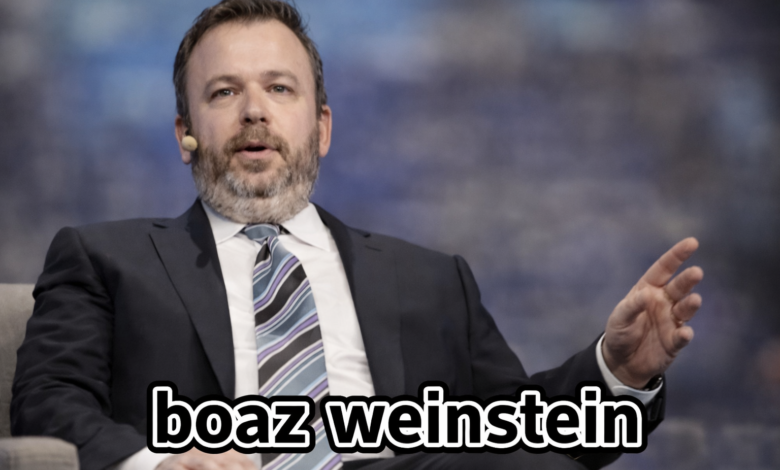
Boaz Weinstein: The Visionary Hedge Fund Manager Transforming Credit Markets

Introduction
Boaz Weinstein is a name that resonates powerfully in the world of hedge funds, derivatives trading, and credit markets. As the founder of Saba Capital Management, he has established himself as a strategic thinker who blends analytical precision with bold decision-making. From a teenage chess prodigy to a leading hedge fund manager, Weinstein’s career demonstrates both the opportunities and risks inherent in high-stakes financial markets. His ability to foresee market disruptions, particularly in credit derivatives, has brought him both acclaim and criticism, reflecting the dual-edged nature of financial innovation.
Born and raised in New York City, Weinstein exhibited exceptional intelligence early in life, mastering chess at a national level while simultaneously cultivating a keen interest in the financial markets. His early experiences with internships at Merrill Lynch and Goldman Sachs shaped his analytical skills and provided him with critical insights into investment strategies. Today, he is recognized not only for his trading acumen but also for his philanthropic efforts, particularly in education and poverty alleviation.
Quick Bio
| Attribute | Information |
|---|---|
| Full Name | Boaz Ronald Weinstein |
| Born | 1973, New York City, USA |
| Nationality | American |
| Education | Stuyvesant High School; BA Philosophy, University of Michigan |
| Career | Deutsche Bank MD → Founder & CIO of Saba Capital Management |
| Notable Achievement | London Whale CDS trade (2012) |
| Family | Former spouse Tali Farhadian; 3 daughters |
| Philanthropy | Tali and Boaz Weinstein Foundation; Robin Hood |
| Assets under management | ~$6 billion (2025) |
Early Life and Education
A Childhood of Intellect and Ambition
Boaz Weinstein grew up on Manhattan’s Upper West Side in a Jewish family, where analytical thinking and problem-solving were highly valued. From a young age, he developed a passion for chess, ultimately achieving National Master status by the age of 16. This early exposure to strategic thinking helped lay the foundation for his later success in financial markets.
During his teenage years, Weinstein also explored stock trading. He participated in and won a competitive stock-picking contest, demonstrating his natural aptitude for financial analysis. These formative experiences not only provided him with practical knowledge but also shaped his disciplined approach to risk management, which remains a hallmark of his trading philosophy.
Education and Early Career Exposure
Weinstein attended the prestigious Stuyvesant High School in New York City, where his academic and strategic talents flourished. He later earned a Bachelor of Arts in Philosophy from the University of Michigan in 1995, an unconventional path for a future hedge fund manager. The study of philosophy refined his critical thinking, ethics, and logical reasoning skills, providing a strong foundation for complex decision-making in finance.
During his education, Weinstein also undertook internships at prominent financial institutions, including Merrill Lynch and Goldman Sachs. These experiences exposed him to the practical workings of investment banking and credit markets, giving him a competitive edge in understanding risk, market trends, and trading strategies.
Career Overview
Deutsche Bank: The Rise of a Credit Derivatives Expert
Weinstein joined Deutsche Bank in 1998, entering the emerging field of credit derivatives. He quickly distinguished himself as a talented trader, focusing on credit default swaps (CDS) at a time when few understood the complexities of this financial instrument. His expertise and innovative strategies helped him become one of the youngest Managing Directors in the bank’s history by the age of 27.
At Deutsche Bank, Weinstein oversaw the global credit trading desk, managing a large proprietary trading team. He demonstrated a unique ability to identify market dislocations and capitalize on mispricing, a skill that would later define his career at Saba Capital. Despite the challenges of the 2008 financial crisis, Weinstein’s experience in navigating turbulent markets strengthened his reputation as a disciplined and forward-thinking trader.
Saba Capital Management: Building a Hedge Fund Legacy
In 2009, Weinstein founded Saba Capital Management, establishing a hedge fund that would specialize in credit-focused strategies. The firm quickly gained recognition for its innovative approach to relative value trading, tail hedging, and activist investing in closed-end funds. Under Weinstein’s leadership, Saba grew to manage approximately $6 billion in assets by 2025.
Saba Capital has also been known for its strategic positioning during high-profile market events. Notably, Weinstein gained acclaim for identifying mispriced credit derivatives during the 2012 “London Whale” event, profiting when JPMorgan suffered billions in losses. This achievement cemented his reputation as a market visionary, capable of navigating complex financial landscapes with precision.
Investment Philosophy and Strategies
Credit Markets Expertise
Weinstein’s expertise lies in credit markets, particularly in identifying opportunities within credit derivatives, structured credit, and relative value strategies. His analytical rigor allows him to assess risk and reward in complex financial instruments, often taking positions that many other investors overlook.
While his strategies have generated significant profits, they also carry inherent risks. The nature of hedge fund trading means that even experienced managers like Weinstein can face market losses during volatile conditions. Nevertheless, his disciplined approach to research, risk management, and market timing has made Saba Capital a respected name in hedge fund investing.
Activist Investing Approach
In addition to traditional trading, Weinstein has increasingly engaged in activist investing. Saba Capital has influenced governance and operational decisions in several investment trusts and funds, advocating for enhanced shareholder value. This approach has brought both praise and criticism, highlighting the complex balance between investor activism and corporate management.
Weinstein’s activist strategies demonstrate his willingness to challenge the status quo in financial markets, reflecting his broader philosophy of strategic insight, risk-taking, and long-term value creation.
Philanthropy and Social Impact
Charitable Initiatives
Beyond finance, Weinstein has dedicated considerable resources to philanthropic efforts. Together with his former spouse Tali Farhadian, he co-founded the Tali and Boaz Weinstein Foundation, focusing on education, poverty alleviation, and support for Jewish causes.
He also participates in organizations such as Robin Hood, a prominent anti-poverty nonprofit in New York City. His charitable involvement reflects a commitment to giving back and leveraging his financial success for social impact, balancing the high-pressure demands of hedge fund management with broader societal contributions.
Influence and Legacy
Weinstein’s legacy extends beyond profits and market victories. He is recognized for pioneering strategies in credit derivatives and hedge fund management while also mentoring future traders and investors. His journey demonstrates the interplay between analytical skill, risk management, and strategic foresight.
Though his career has included high-stakes successes and occasional controversies, Weinstein remains a prominent figure whose decisions influence both market trends and governance practices. His work serves as a blueprint for aspiring hedge fund managers navigating complex financial markets.
Conclusion
Boaz Weinstein exemplifies the combination of intelligence, strategic thinking, and calculated risk-taking that defines modern hedge fund management. From his early life as a chess prodigy and stock market enthusiast to founding Saba Capital Management, Weinstein has consistently demonstrated the ability to identify opportunities where others see uncertainty.
His career highlights both the positive outcomes of disciplined financial strategies and the inherent risks of high-stakes trading. Beyond finance, his philanthropic endeavors showcase a commitment to social responsibility, reinforcing the importance of balancing personal success with societal impact. For investors, aspiring traders, and financial professionals, Boaz Weinstein’s journey offers valuable lessons in strategy, resilience, and vision.
Frequently Asked Questions (FAQ)
Q1: What is Boaz Weinstein known for?
A1: Boaz Weinstein is best known as the founder of Saba Capital Management and for his expertise in credit derivatives, particularly profiting from the London Whale credit events in 2012.
Q2: What is Boaz Weinstein’s educational background?
A2: He attended Stuyvesant High School in New York City and earned a Bachelor of Arts in Philosophy from the University of Michigan.
Q3: How much assets does Saba Capital manage?
A3: As of 2025, Saba Capital Management manages approximately $6 billion in assets.
Q4: Is Boaz Weinstein involved in philanthropy?
A4: Yes, he co-founded the Tali and Boaz Weinstein Foundation, focusing on education, poverty alleviation, and Jewish causes. He also supports organizations like Robin Hood.
Q5: What is Boaz Weinstein’s investment strategy?
A5: He specializes in credit-focused hedge fund strategies, including relative value trading, tail hedging, and activist investing in closed-end funds.